For years, choosing an open-weight AI model was a developer's call — grab a downloadable model, fine-tune it, ship it. That era ended in the summer of 2026. In a single stretch of weeks, the CEO of NVIDIA published a letter defending open weights that dozens of companies signed, Anthropic issued a formal position on where it stands, the UK's security researchers measured exactly how capable these models are getting, and the White House convened the major labs over how models should be reviewed. When open weights are on the agenda in Washington and in every major lab's press office, they are no longer a technical preference. They are a procurement decision — and this is the checklist to make it with, backed by vendor-neutral AI strategy.
Open-weight AI models — downloadable parameters you can run and fine-tune on your own infrastructure — are now a business procurement decision, not a developer preference. They offer real data control, lower cost, and no vendor lock-in, but a released model can never be recalled, and open models are closing the cyber-capability gap with frontier systems. Before teams deploy one, distinguish open weights from open source, require cyber and misuse testing, decide where private hosting helps, track provenance and licenses, and set approval rules.
Open Weights Are Not Open Source
Start with the distinction that trips up most buyers, because the words are used loosely and the difference carries legal and security weight. An open-weight model is one whose trained parameters — the weights — you can download, run, and fine-tune yourself. That is powerful, but it is not the same as open source. Open source, properly used, means the full package: the training code, often the data, and a license that grants broad rights to use, modify, and redistribute.
Most models marketed as open are open-weight, not open-source. You get the weights, but not necessarily the training data, the full recipe, or an unrestricted license. Popular downloadable models often ship under custom terms that limit commercial use, cap user counts, or restrict fields of use. Treating an open-weight model as if it were freely open source is how a business backs into a license violation. Read the actual terms, not the marketing — the same rigor we bring to an AI Bill of Materials.
Why This Became a Boardroom Question
The policy fight made open weights a leadership issue overnight. On July 24, 2026, NVIDIA's Jensen Huang published a letter titled Open Weights and American AI Leadership, urging Washington not to restrict open-weight models; within a day, according to reporting, the signatory list grew to roughly fifty companies, including Microsoft, Meta, IBM, Hugging Face, Mistral, and the Linux Foundation. Their argument: models that can be downloaded, inspected, and run on private infrastructure widen access, sharpen competition, and aid security research.
Not everyone lined up the same way. On July 27, 2026, Anthropic published its own position, with CEO Dario Amodei clarifying that the company has never advocated banning open-weight models and calling those without dangerous capabilities a public good — while pressing for capability-based safety testing of powerful models, open or closed. Days later, the White House convened major labs over how frontier models should be reviewed before release. The takeaway for a business is not which side is right. It is that open-weight adoption now sits inside an active security and policy debate, so your own use of these models deserves the same deliberation.
| Checklist item | Why it matters | What to do |
|---|---|---|
| Weights vs source | "Open" rarely means fully open | Read the license, not the label |
| Benefits vs irreversible risk | A released model cannot be recalled | Weigh data control against exposure |
| Cyber and misuse testing | Open models are closing the cyber gap | Test capability before you deploy |
| Private hosting fit | Some data cannot touch a cloud | Self-host where control matters most |
| Provenance and licenses | Origin and terms carry risk | Track who made it and how you may use it |
| Approval rules | Anyone can download a model | Gate deployment behind sign-off |
| Ongoing monitoring | Models and licenses change | Re-check provenance and terms over time |
The Capability Gap Is Real but Closing
The reason governments are paying attention is measurable. In July 2026, the UK's AI Security Institute published its first public measurement of how far open-weight models trail closed ones on offensive cyber tasks. The finding: the most capable downloadable models now lag the top closed systems by roughly four to seven months, narrowed from six to ten months across most of 2025. The gap is real, and it is closing.
Two facts make this a business issue, not an academic one. The capability is arriving cheaply: the institute's figures put the run cost of a leading open model at a small fraction of a frontier one — dollars versus tens of dollars for the same volume of work. Capable and cheap is exactly the combination that pulls a downloadable model into your stack, and the same combination that lets it be misused. The UK institute's analysis of open-weight cyber capability is the clearest public benchmark, and it belongs in your evaluation — the same discipline we apply when we help clients pick the right model for security.
The One Risk You Cannot Undo
Every other risk on this list is manageable. This one is not, and it defines the category. When you deploy a closed model through an API, the vendor can patch it, restrict it, or pull it. When a model's weights are released, they are released for good. No one can recall a downloaded file. A model that later proves capable of harm cannot be un-shipped, and neither can your fine-tuned derivative of it.
That irreversibility is why testing must come before deployment, not after. It is also why provenance matters: the debate over open weights is entangled with national-security concern about model origin and industrial-scale distillation, and a downloadable model's lineage is not always clear. You do not need to resolve the geopolitics. You do need to know where your model came from, what it can do, and who approved running it — which is why open-weight adoption belongs under the same governance as every other AI-enabled system you inventory.
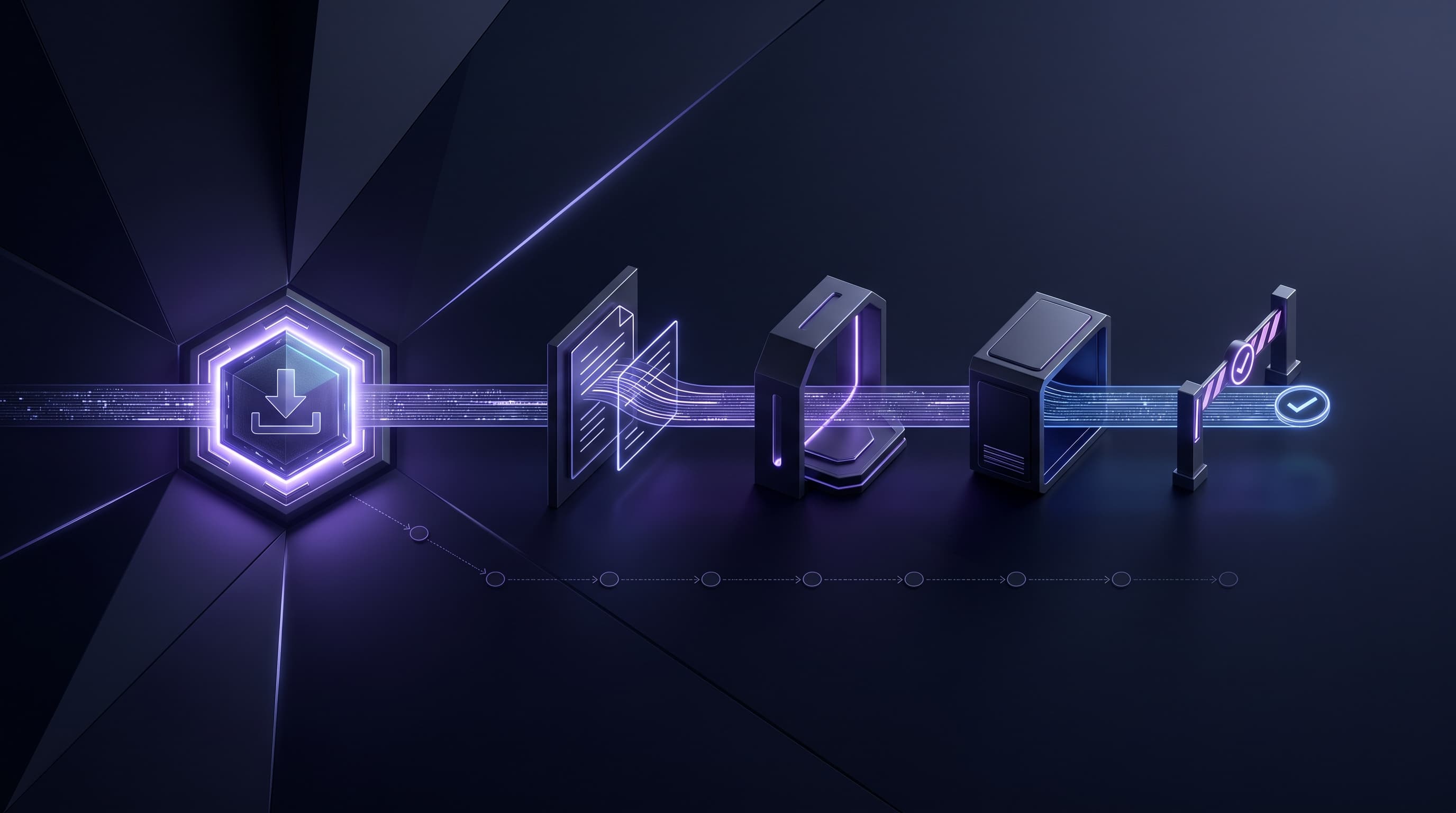
- 01
Classify
Confirm whether it is open weight or open source, and read the license.
- 02
Test
Run cyber and misuse evaluations on the model before any deployment.
- 03
Host
Decide where it runs — private infrastructure where data control matters.
- 04
Approve
Gate deployment behind named sign-off, with provenance on record.
Your Open-Weight Model Checklist
Before a downloadable model reaches a real workflow, an owner should be able to confirm each of these. ITECS runs this as a procurement gate.
Distinguish open weights from open source. Read the actual license. Downloadable weights rarely come with full open-source rights, and the terms decide what you may legally do.
Weigh the benefits against irreversible risk. Set the data control, cost, and lock-in advantages against the fact that a released model, and your derivative of it, can never be recalled.
Require cyber and misuse testing. Evaluate what the model can do — including offensive capability — on your own tests before deployment, not after. Capable and cheap also means abusable.
Decide where private hosting helps. Self-host the model where data control is the point, so sensitive inputs never leave your environment, and use hosted options where they do not.
Monitor provenance and licenses. Track who built the model, where it came from, and how its license lets you use it — and re-check, because terms and lineage can change.
Set approval rules before deployment. Anyone can download a model in minutes. Gate production use behind named sign-off, so adoption is a decision, not an accident.
How ITECS Governs Open-Weight Adoption
Open-weight models can be a genuine advantage — control of your data, lower cost, freedom from a single vendor. They can also be a quiet liability if a team downloads one without a second thought. ITECS makes the choice deliberate. We are vendor-neutral: we do not push open or closed, we help you decide model by model. We read the license and separate open weight from open source, test the model's capability and misuse potential on your own data, advise where private hosting earns its keep, track provenance, and put an approval gate in front of production.
We price this the way we price all advisory work — hourly consulting or prepaid retainer hours with tracked usage, no monthly minimum and a 12-month expiry, plus a flat fee for a scoped open-weight evaluation and governance build. We start with a data and AI readiness audit and pair it with blind, task-specific model evaluation so the decision rests on your evidence, not a leaderboard. The payoff is the upside of open weights without the accidents. When you are ready to govern open-weight adoption, talk to the ITECS team.